What the Box Tells You: A Buyer's Ritual for Judging a Factory by Its Sample
Photo: Intel Free Press, CC BY 2.0, via Wikimedia Commons
Every experienced importer has a version of the same story. The audit was clean, the references checked out, the price was sharp — and then the first production run arrived with seams that puckered, cartons that collapsed in a Georgia summer, and a finish that looked nothing like the golden sample that won the business.
The uncomfortable truth is that most of those failures were visible months earlier, sitting on a desk, in the sample itself. A physical sample is not a product demo. It is a confession. It tells you how the factory behaves when nobody is watching, long before a purchase order gives you leverage.
The good news: you don't need a materials lab to read it. You need a ritual — the same sequence of questions, applied to every sample, every time.
Start Before You Touch the Product
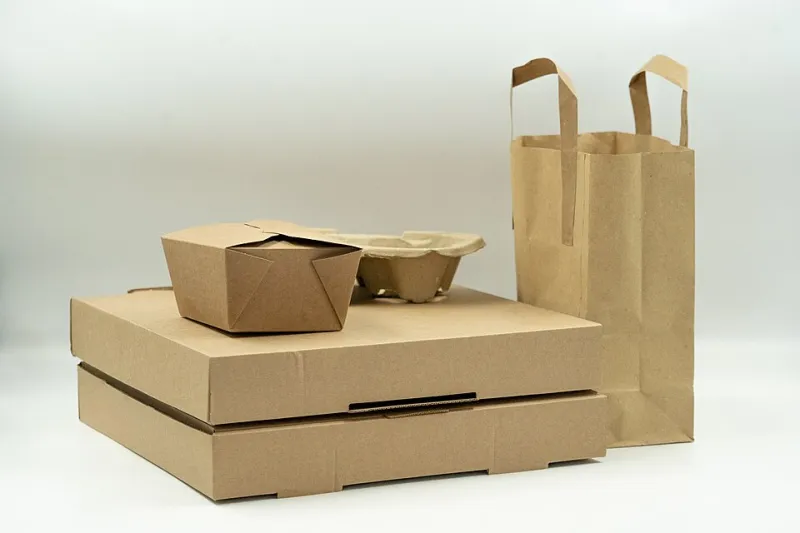
Resist the urge to open the box immediately. The packaging is the first test, and it is the one suppliers most often fail.
Ask yourself:
- Did they package it, or did they ship it? A sample wrapped in a reused carton with newspaper wadding tells you the factory treats sampling as an afterthought. If they cut corners on the one unit designed to win your business, imagine the production floor on a Tuesday afternoon.
- Is the inner packaging production-representative? If your product will retail on an American shelf, ask for the retail-ready package in the sample round, not later. A beautiful unit in a crude box is a warning, not a placeholder.
- How did it survive the journey? Crushed corners, moisture staining, or a rattling interior tell you about their export packing standards — knowledge you want before a forty-foot container, not after.
Measure Against the Spec, Not Against Hope
Once the product is out, the discipline begins. The single most common mistake American buyers make is evaluating the sample impressionistically — it feels good, it looks right. Feel is not a specification.
Bring a caliper, a scale, and the agreed spec sheet. Check:
- Dimensions and weight against the stated tolerances, not just the target. A part that hits the nominal dimension but drifts toward the tolerance limit suggests a process running loose.
- Material claims. If the quote says 304 stainless or virgin ABS, verify what you can. A magnet, a scratch test, and a density check are crude but revealing. Suppliers who overstate materials count on buyers who never check.
- Consistency across multiples. Never evaluate one sample. Ask for three to five units. Spread them out. If unit one and unit three differ meaningfully, you have just observed their process capability in miniature — the same variance you'll see across a full run, at a scale you can afford to see it.
Hunt for the Finishing Details
Finishing is where quality culture hides, because finishing is optional effort. A factory can hit dimensions on a machine; caring about a smooth gate mark, a clean seam, or an aligned label is a choice.
Look specifically at:
- Edges and seams. Run a fingertip along every edge. Burrs, flash, and rough seams indicate shortcuts in secondary operations — the steps most likely to be cut under deadline pressure.
- Branding and printing. Check logo alignment, print registration, and ink durability. A scuffed logo on a sample is a preview of the shelf-return conversation you'll have later.
- Fasteners and fittings. Do screws seat cleanly? Do caps snap with confidence or rattle with ambiguity? Small hardware is cheap to fix and expensive to fake, so suppliers who get it right are telling you something.
Ask the Questions the Sample Raises
The sample's real value is as a conversation starter. Every flaw or anomaly should generate a specific question, in writing: What process produced this? What is your inspection step for it? What will change at production volume?
How the supplier responds matters as much as the answer. A factory that engages with specifics — root cause, corrective action, revised process — is showing you its quality culture in action. One that sends back a vague reassurance is showing you something too.
This is also the moment to ask for pre-production samples pulled from the actual tooling and production line, not the engineering lab. The gap between the two is where many first orders go wrong.
Score It, and Keep the Record
Formalize the ritual. A simple weighted scorecard — packaging, dimensional accuracy, material verification, finishing, documentation — applied consistently across suppliers turns impression into evidence. Over a few sourcing cycles, patterns emerge that no audit report predicted.
Keep every sample, labeled and dated. When a production dispute arises eighteen months later, the golden sample on your shelf is not a souvenir. It is a contract.
The Sample Never Lies — But It Whispers
No single sample can guarantee a reliable supplier, and a flawless sample from a showroom factory is its own kind of risk. But the details don't lie about care. Packaging choices, tolerance discipline, finishing pride — these are the fingerprints of a quality culture, and they are legible to anyone willing to slow down and look.
At KROS International USA, we walk our partners through exactly this evaluation before a single container is booked. Because the cheapest place to discover a supplier's true standards is a sample room — and the most expensive is a port.