Five Time Zones, One Missing Box: Fixing the Sample Pipeline Before It Costs You the Season
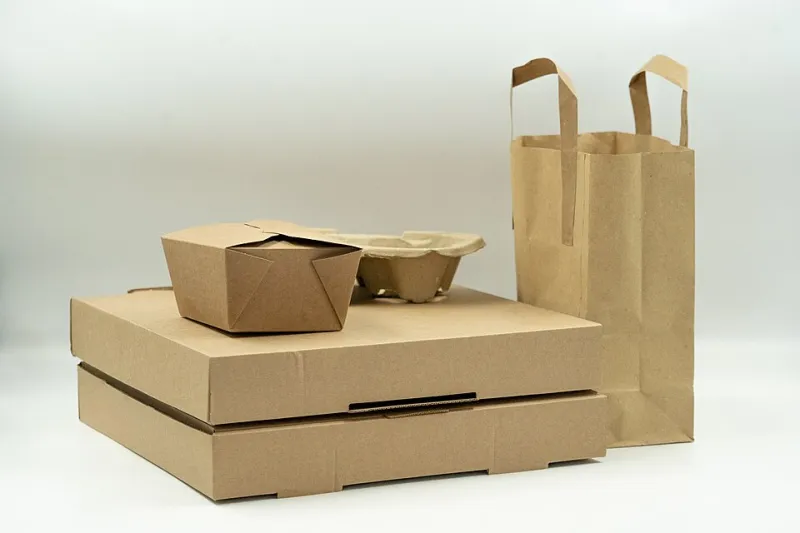
Photo: Meanwell Packaging, CC BY 2.0, via Wikimedia Commons
Every importer remembers their first container. Almost nobody remembers their first sample — except when it never arrived.
The sampling phase is where American product businesses are quietly won or lost. A kitchenware brand in Austin, a boutique apparel label in Brooklyn, a hardware startup in Denver: all of them live and die by how quickly a prototype can move from a factory floor in Shenzhen or Ho Chi Minh City to a desk in the United States, get marked up, and move back with revisions. Yet while companies obsess over ocean freight rates and tariff schedules, the sample pipeline — the dozens of small, urgent, irregular shipments that precede any real order — is left to chance.
That oversight is expensive.
Why Samples Are Harder Than Containers
A production shipment follows a known path: booked, documented, cleared, delivered. Samples do not. They are one-off shipments, often sent by whatever courier the supplier prefers, with paperwork written by someone who may handle this exact scenario twice a year.
The result is a category of shipment that combines the worst properties of both worlds — the urgency of air express with the documentation burden of commercial freight. A $400 sample of a consumer electronics enclosure can sit in a Memphis customs facility for nine days because the commercial invoice listed a value of "sample" with no figure attached. A textile prototype can be rejected by the courier at pickup because the supplier selected terms that shift customs responsibility to a consignee who was never notified.
And unlike a container, a delayed sample has no backup. There is exactly one of it.
The Four Places Samples Go to Die
Across hundreds of sampling cycles, the failure modes repeat with remarkable consistency.
The paperwork vacuum. Suppliers frequently under-declare or vaguely declare sample values to "help" the buyer avoid duties. US Customs does not share this generosity. An invoice reading "sample — no commercial value" is not a loophole; it is a flag. Shipments get held, inspected, and occasionally assessed penalties, and the buyer — as the importer of record — owns the problem.
The incoterm mismatch. A supplier ships DDP without asking, or EXW without telling anyone. The first means surprise brokerage fees on the buyer's doorstep; the second means a prototype parked at an origin warehouse that nobody in Ohio knows how to contact. Either way, the sample stops moving until a human being in the wrong time zone wakes up.
The silent middle. Between courier scans, there are long stretches of nothing. A sample showing "label created" for six days is not in transit — it is in a queue, a warehouse, or a problem pile. Most buyers do not learn to read these signals until they have already lost a week.
The revision loop collapse. The deadliest mode is the slow one. A sample takes twelve days to arrive, feedback takes four, the revised sample takes twelve more. Repeat three times and a product launch has quietly slipped from spring to back-to-school to holiday — or to a competitor who solved this first.
What the Delay Actually Costs
It is tempting to shrug at a $60 courier fee or a lost week. Zoom out and the math changes.
For a seasonal product, every week of sampling delay pushes the production start later, compresses the ocean transit buffer, and eventually forces a choice between air freighting the entire order (erasing the margin) or missing the retail window (erasing the year). For a product under active development, delay compounds: each revision cycle that stretches from two weeks to five can push a launch past a trade show, a retailer's line-review calendar, or a category's peak season.
The sample is not a cost line. It is the opening move of the entire supply chain, and it sets the tempo for everything after it.
A Playbook for a Repeatable Sample Pipeline
The fix is not exotic. It is process discipline applied to a phase most companies treat as improvisation.
Standardize the paperwork before the first shipment. Give every supplier a one-page sample shipping instruction: declare true value, describe the goods accurately, use a named incoterm (DAP with a specified US delivery point works well for most sample flows), and include the buyer's EIN and contact on every document. One page, sent once, prevents a hundred holds.
Consolidate the courier relationship. When the buyer controls the courier account rather than accepting the supplier's default, three things happen: rates drop, tracking becomes visible in one place, and — critically — the customs broker is one the buyer has vetted. Ask suppliers to ship on your account. Most will, once asked.
Build a revision calendar, not a wish. Map the sampling cycle backward from the production deadline. If you need a purchase order signed by March 1 and expect three revision rounds, the first sample must be in hand by early January — and the feedback turnaround must be measured in days, not weeks. Put the dates in writing with the supplier. Ambiguity is where timelines go to die.
Use a US consolidation point for multi-supplier sampling. Companies sourcing from several factories often find that routing samples through a single stateside hub — where they can be inspected, photographed, and compared side by side — turns a scattered stream of untrackable parcels into one coherent workflow. It also means a failed sample is caught in Los Angeles or New Jersey, not at your loading dock.
Escalate on a timer. Set a rule: any sample with no movement scan for 48 hours triggers an inquiry to the courier and the supplier simultaneously. Delays compound; early questions are cheap, late ones are not.
The Sample Is the First Test
There is a secondary benefit to tightening this process that experienced importers come to appreciate: the sampling phase is the clearest preview of how a supplier will behave at production volume. A factory that cannot correctly complete a commercial invoice for a two-pound parcel will not impress you with a 400-carton shipment's documentation. A supplier who proactively flags a courier delay is telling you something about how they will handle a port congestion event.
Global trade rewards companies that treat small processes with large-process seriousness. The sample pipeline is the smallest process there is — and, for the importer who fixes it, an quietly durable competitive advantage. Your competitors are still waiting on a box that is sitting in a customs queue. Your prototypes are on their third revision, and your season starts on time.
That is the whole game, played in miniature.