Midnight Is When You Learn Who Your Freight Partner Really Is

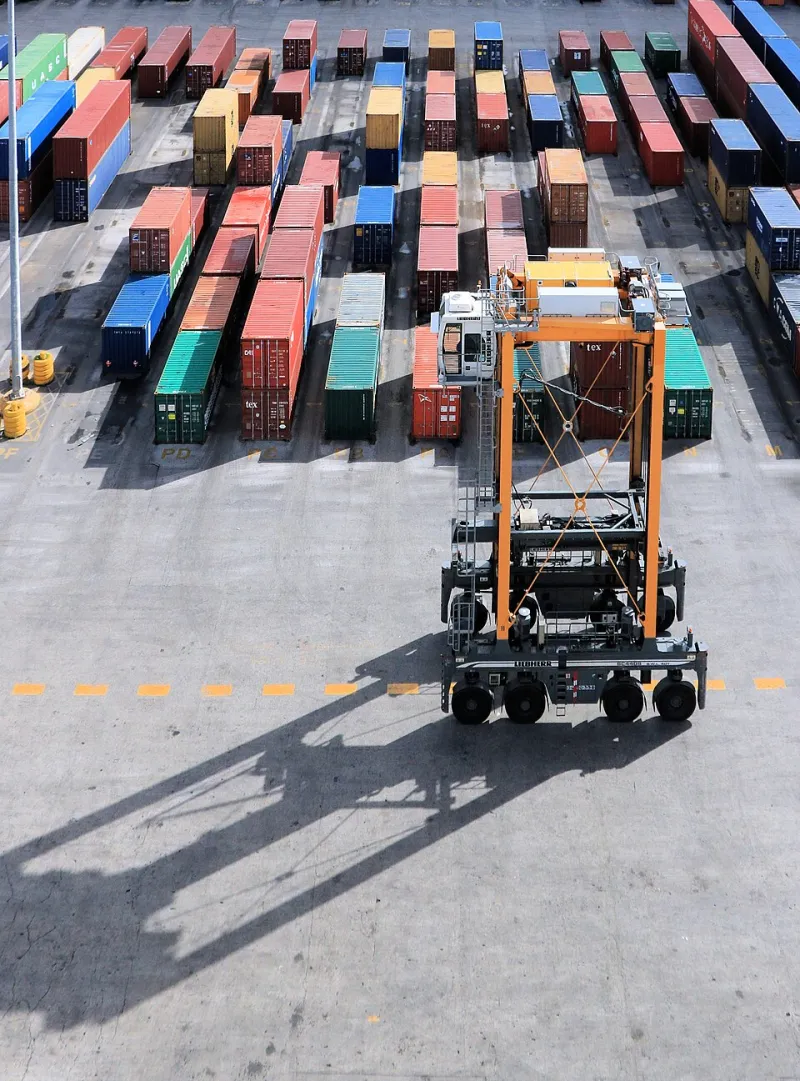
Photo: Achim Lammerts (Syntaxys), CC BY-SA 4.0, via Wikimedia Commons
Every importer eventually gets the call. It rarely comes at a convenient time. It comes on a holiday weekend, or at two in the morning, when a refrigerated container has lost power on a Houston ramp, or when customs has flagged a Newark entry for examination three days before a major retail reset. What happens in the next ninety minutes tells you more about your logistics partner than any pitch deck ever will.
At KROS International USA, we have sat on both sides of that phone call — receiving it and making it. And we have come to believe that the freight industry's most reliable product is not a rate. It is a response.
The Rate Card Tells You Nothing
Anyone can be agreeable during a request for quotation. Pricing is a spreadsheet exercise; responsiveness at 3 a.m. is a character test. The difference between partners becomes visible only when something breaks — and in international trade, something always breaks.
Consider a composite scenario drawn from real patterns we have seen repeatedly. A reefer carrying perishable goods arrives in Houston during a Gulf Coast port congestion event. The genset fails. The clock is now running against the cargo, not the calendar. A partner who forwards the drayage carrier's automated status email has effectively done nothing. A partner who calls the terminal, arranges a generator swap, and sends you a plain-English summary — what happened, what we did, what it costs, what happens next — has earned the relationship for years.
The distinction is not heroics. It is ownership. The email-forwarder treats your problem as an update. The owner treats it as an assignment.
Two Responses, One Shipment
We watched a nearly identical customs hold play out two different ways for two different importers at Newark. Both had entries pulled for exam. Both faced potential missed delivery windows to East Coast distribution centers.
The first importer's broker-partner sent a form notice: "Shipment selected for exam, will advise." Four days of silence followed. The second importer's partner did three things within hours: called the CES facility to establish queue position, reviewed the entry paperwork to identify any documentation weaknesses that could extend the hold, and gave the client a realistic range of outcomes with dates attached. The exam still took time — nobody can conjure Customs and Border Protection availability out of thin air — but the importer could brief their own customers with confidence instead of guessing.
Same port. Same regulation. Entirely different business outcomes. The difference was never the rate, which differed by less than two percent between the two relationships.
Why the Cheap Option Gets Expensive at Night
There is a structural reason thin intermediaries fail the midnight test. Firms that own no operational capability — no carrier relationships, no customs expertise in-house, no presence at the ports where your cargo actually sits — have no levers to pull. All they can do is relay information, one email at a time, adding a day to every decision loop.
Firms with genuine operational depth can act because they have someone to call and standing to call them. That standing is built in daylight, through years of doing right by carriers, terminals, and brokers. It cannot be improvised when the reefer is warming.
A Pressure-Test Before You Sign
You do not need to wait for a crisis to learn how a prospective partner behaves in one. Before committing volume, put candidates through a simple four-part test:
1. Ask for a failure story. Request a specific incident — not a testimonial — where a shipment went wrong and walk through exactly what they did, hour by hour. Vague answers about "great communication" are a red flag. Names of terminals and timelines are a green one.
2. Ask who answers at night. Is there a duty line, a real escalation path, a named person? If after-hours contact means a shared inbox, you have your answer.
3. Probe the cost conversation. Ask how they handle unplanned charges — exam fees, demurrage, generator swaps. Owners surface costs early and explain them. Forwarders bury them in the next invoice and hope you do not read it.
4. Test the update cadence. During a routine shipment, note how they communicate without being asked. Partners who proactively report smooth shipments are the same ones who report rough ones.
The Standard We Hold Ourselves To
Our view, shaped by the American market's demand for reliability, is straightforward: a logistics partner should behave as though your cargo carries their name on it. When the phone rings at an unreasonable hour — and it will — the only question that matters is whether the voice on the other end owns the problem or merely forwards it.
Choose accordingly, and choose before the call comes.