Ninety Days to Your First Container: A Founder's Timeline for Importing Without Regret

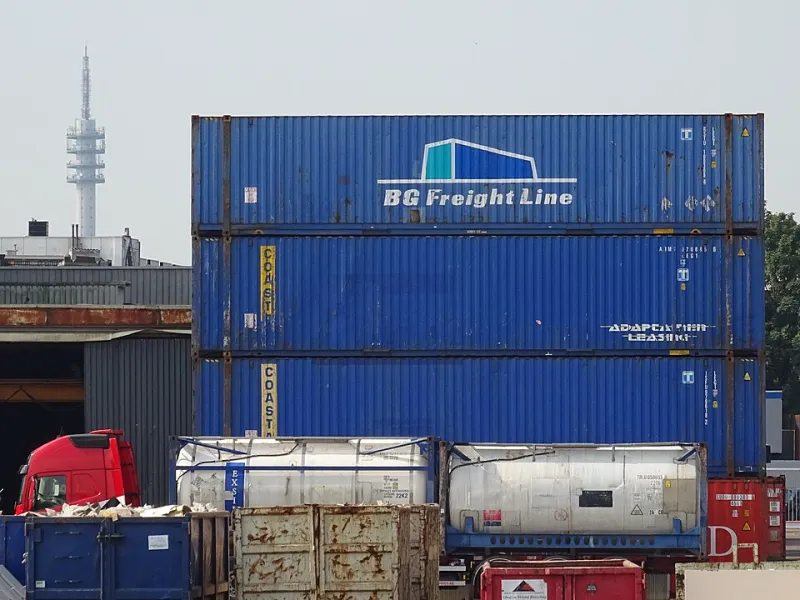
Photo: JoachimKohler-HB, CC BY-SA 4.0, via Wikimedia Commons
For many American entrepreneurs, the first overseas purchase order is the moment a side hustle becomes a real company. It is also the moment the stakes change. A domestic supplier that misses a deadline costs you a phone call; an overseas supplier that misses a deadline costs you a season of retail shelf space.
The good news is that the process is more learnable than most founders assume. What follows is a working timeline — roughly ninety days from first contact to a container cleared through a US port — with the failure points we see most often at each stage.
Days 1–15: Samples, Specifications, and Saying No
Start with a written product specification before you send a single inquiry. Dimensions, materials, tolerances, packaging, labeling — the more precise your document, the more accurate your quotes. Vague requests invite vague suppliers.
When you request samples, request them from several manufacturers, not one. A common trap: falling for a polished sample from a trading company that doesn't actually control the factory. Ask directly who manufactures the product and whether you can verify it.
Failure point: Skipping the spec sheet. Founders who rely on verbal descriptions frequently receive goods that are technically what they asked for and practically unusable.
Days 16–30: Payment Terms and the Art of Protecting Your Cash
First orders almost always mean a deposit — commonly 30% up front with the balance due before shipment or against a bill of lading copy. That's normal. What matters is the paperwork around it.
Consider a letter of credit or, for smaller amounts, third-party escrow or trade-assurance platforms. Never wire full payment to a bank account that doesn't match the name on your contract. Verify the beneficiary independently — a five-minute phone call can prevent a five-figure loss.
Failure point: Paying the balance before pre-shipment inspection. Once goods are on the water, your leverage drops to zero.
Days 31–50: Vetting, Contracts, and the Pre-Production Pause
Before mass production begins, revisit everything. Confirm the factory has your final approved sample on file, your labeling complies with US requirements (think FTC, CPSC, or FDA depending on the category), and your quality expectations are documented in the purchase order itself.
This is also the window to engage a third-party inspection service for a pre-shipment check. For a few hundred dollars, an inspector can catch defective stitching, wrong carton counts, or mismatched barcodes while there's still time to fix them.
Failure point: Treating the contract as a formality. A purchase order that doesn't specify inspection rights, remedy for defects, and delivery terms (Incoterms matter — understand the difference between FOB and EXW before you sign) is a handshake in a nicer font.
Days 51–65: Choosing Your Freight Forwarder
Your forwarder is the logistics partner who books vessel space, handles export documentation on the origin side, and coordinates arrival at a US port. Interview at least two or three, and ask for an all-in quotation — ocean freight, origin charges, destination fees, and documentation. The cheapest headline rate frequently hides the fattest destination charges.
Decide between a full container and consolidation (LCL). If your order fills less than half a container, consolidation usually wins, though it adds transit time and handling risk.
Failure point: Not understanding demurrage and detention. If your goods sit at the port past the free period — usually because customs paperwork stalled — storage fees accrue daily and they are not negotiable.
Days 66–90: Customs Clearance and the Last Mile
To clear US customs you will need a customs bond (continuous bonds make sense for anyone importing regularly), a commercial invoice, a packing list, and a bill of lading. Your customs broker files the entry and calculates duties — including any Section 301 tariffs if your goods originate from China.
Check your HTS classification carefully. Misclassification isn't just a fine risk; it's the difference between a 3% duty and a 25% one.
Failure point: Discovering at the port that your product needs an import permit, a compliance certificate, or additional marking. A product held by CBP is a product you're paying to store.
The Ninety-First Day and Beyond
Founders who succeed on their first import tend to share one habit: they front-load the unglamorous work. Specifications, contracts, inspections, and classification questions are all cheap to answer in week one and expensive to answer in week twelve.
Global trade rewards preparation over optimism. Treat your first order as a rehearsal — modest in size, rigorous in process — and the second one gets easier. The third one, you'll do in your sleep.