One Container, Sixteen Hands: The Hidden Journey of an Imported Product
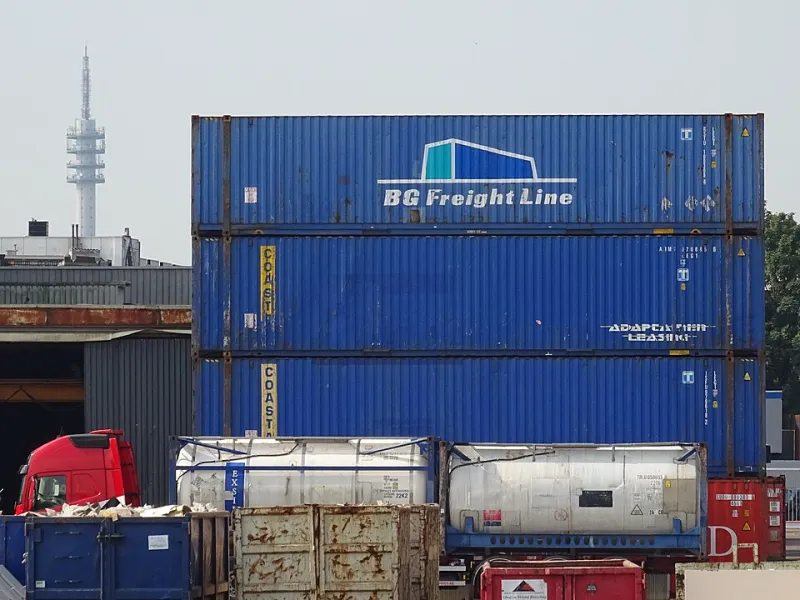
Photo: AgainErick, CC BY-SA 4.0, via Wikimedia Commons
For many American business owners, the word 'importing' conjures a vague, slightly intimidating image: a steel box somewhere on the ocean, moving toward a destination nobody can quite picture. The reality is far more coordinated — and far more knowable — than most newcomers assume.
To pull back the curtain, let's trace one hypothetical shipment: 1,200 cartons of ceramic drinkware, produced at a facility in Vietnam and destined for a boutique kitchenware retailer in Columbus, Ohio. Between the factory floor and that retailer's shelf, the shipment will pass through the hands of more than a dozen professionals and touch half a dozen modes of transport.
Step One: Booking and Origin Handling
The journey begins before the goods ever move. The importer — or, more commonly, their freight forwarder — books space on a vessel, a process that can happen weeks in advance. In the ceramics trade, cargo is typically consolidated into a full 40-foot container, stuffed and sealed at the factory under the supplier's supervision.
Origin handling includes trucking the container from the factory to the port of loading (in our example, Cai Mep, near Ho Chi Minh City), export customs formalities in Vietnam, and terminal loading. Every one of these steps generates documentation: a commercial invoice, a packing list, and the all-important bill of lading, which serves simultaneously as a receipt, a contract of carriage, and a document of title.
The Ocean Leg: Slow, Cheap, and Mostly Invisible
A westbound transpacific crossing to the US West Coast takes roughly two to three weeks depending on the port pair. This is the longest and least expensive segment of the journey — ocean freight remains the workhorse of American import volume for good reason.
During transit, the shipment is largely out of anyone's hands. That's precisely why experienced forwarders monitor vessel schedules continuously; a missed connection or a port congestion event in Long Beach can ripple through the entire downstream plan.
US Customs Clearance: Where Paperwork Becomes Law
Before the container can leave a US terminal, it must clear US Customs and Border Protection. For our drinkware, this means classifying the goods under the correct Harmonized Tariff Schedule (HTS) code, declaring a customs value, and calculating duty. Ceramic tableware carries its own duty rates, and depending on the country of origin, additional trade remedies may apply.
A licensed customs broker — working on behalf of the importer — files the entry, submits documentation, and arranges duty payment. CBP may examine the shipment; most containers move through without incident, but a well-prepared entry file is the difference between a two-day clearance and a two-week delay.
One point worth emphasizing for first-time importers: the importer of record, not the overseas supplier, is legally responsible for the accuracy of that entry. Getting classification and valuation right is not optional housekeeping — it is a legal obligation.
Drayage: The Shortest, Most Complicated Leg
Once released, the container must be trucked from the marine terminal to its next stop. In industry parlance this is 'drayage,' and despite covering as little as 20 or 30 miles, it is often the most operationally fraught segment of the trip. Terminal appointment systems, chassis availability, and port hours all constrain the window in which a driver can retrieve a box.
Our ceramics container is drayed to a warehouse in the Los Angeles basin, where it is unloaded ('transloaded' or deconsolidated), and the goods are prepared for domestic distribution — often on pallets bound for an inland destination.
The Domestic Move and Last-Mile Delivery
From the LA warehouse, the palletized goods travel by domestic truckload or LTL (less-than-truckload) carrier to a distribution center or directly to the retailer in Columbus. Transit might take four to six days by road, or two days by intermodal rail for cost-sensitive, non-urgent freight.
The final leg — from the retailer's distribution center to an individual store shelf — is the classic 'last mile,' handled by the retailer's own logistics network or a regional carrier. By the time a shopper picks up one of those ceramic mugs, it has traveled roughly 7,000 miles and changed hands more than a dozen times.
What This Means for Your Business
None of these steps is mysterious in isolation. What overwhelms newcomers is coordination: matching vessel cut-offs to factory readiness, filing ISF (Importer Security Filing) data before loading, aligning bond coverage, and sequencing drayage against terminal free time.
That coordination is precisely what a freight forwarding and trade services partner exists to manage. If you are weighing your first import program, start with three questions: Who will act as your importer of record? Who will classify your goods and file your entries? And who will own the shipment when — not if — a schedule slips?
Answer those clearly, and the distance between an overseas factory and your customer's shelf becomes a manageable, even predictable, pipeline.