Two Quotes, One Regret: The Hidden Price of Winning on Price
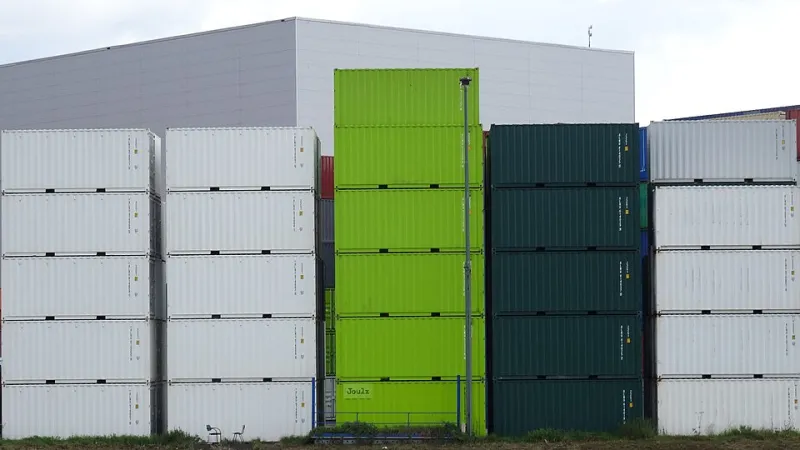
Photo: AgainErick, CC BY-SA 4.0, via Wikimedia Commons
Every American importer knows the ritual. Two — sometimes five — quotes land in your inbox, all for the same SKU, all FOB from a familiar Asian port. The spreadsheets look interchangeable until you scroll to the bottom line. One number is 8% lower than the rest, and suddenly that supplier is the frontrunner.
We've watched this movie many times at KROS International USA, and it rarely ends the way the spreadsheet promises. The cheapest quote is not a bargain. It's a loan — one that gets repaid in chargebacks, rejected containers, and the shelf space you never get back.
The Two Quotes That Tell the Story
Consider a composite case drawn from real patterns we see in mid-sized US importing. A home-goods retailer in the Southeast requests quotes on a decorative storage line. Supplier A comes in at $4.12 per unit landed. Supplier B quotes $4.46 — a 7.7% gap that, across a 20,000-unit annual program, looks like $68,000 in savings.
The buyer signs with A. Within two quarters, the arithmetic changes:
- A 3.1% defect rate at the DC, versus the 0.8% the buyer experienced with their previous vendor, triggers $22,000 in sort-and-rework labor.
- Two retail chargebacks for late deliveries — a consequence of Supplier A padding production schedules — total $18,500.
- A quality hold on a seasonal shipment forces air freight replacement on 4,000 units, adding $31,000 that no quote ever anticipated.
- The retailer's category manager, unimpressed by the fill rate, cuts the program's shelf facings by a third. The lost margin on that placement is conservatively $40,000 for the year.
Total damage: roughly $111,500 against $68,000 in nominal savings. Supplier B's 'expensive' quote was, in truth, the cheaper one.
What the Cheap Quote Was Hiding
Here's the uncomfortable part: the warning signs were on the page. Low quotes don't materialize from efficiency alone. They come from somewhere, and the somewhere is usually one of four places.
Thinner inputs. A per-unit price below the market band often means substituted materials — a lighter-gauge hinge, a lower-grade coating. The unit passes inspection at origin and fails in an American living room.
Compressed timelines. Suppliers who underbid frequently overbook their production calendar. Your delivery date is a hope, not a commitment, and hope is what chargebacks are made of.
Deferred compliance. Skipping third-party testing or using outdated safety documentation saves cents per unit — until a CBP exam or a retailer's compliance audit turns those cents into five-figure penalties.
No margin for error. A supplier bidding at break-even has no capacity to absorb a raw-material spike, a port delay, or a rework request. The first surprise becomes your surprise.
The True-Cost Scorecard
Before your next PO, score every quote on five factors. We use a version of this internally when vetting partners on behalf of US clients.
-
Quote variance. Is the price more than 5% below the median of your quote set? If yes, demand an itemized cost breakdown. Legitimate efficiency has explanations; quiet degradation does not.
-
Documentation depth. Does the quote specify materials, tolerances, packaging specs, and testing standards — or is it a single number on a letterhead? Specificity is a proxy for operational maturity.
-
Schedule realism. Compare stated lead times against the supplier's historical performance, not their promises. Ask for references from US customers of similar size.
-
Compliance posture. Confirm current third-party test reports, correct HTS classification, and familiarity with US labeling requirements. A supplier who hesitates here is borrowing against your future.
-
Recovery capacity. Ask directly: if a shipment fails inspection, what is your remediation process and who pays? Vague answers now predict expensive answers later.
Score each quote 1–5 on every factor. A quote that wins on price but loses on documentation, schedule realism, and recovery capacity isn't a deal — it's a deferred invoice.
Price Is a Signal, Not a Sum
The deeper lesson is about how to read a quote at all. American buyers are trained to see landed cost as a ceiling to minimize. We'd argue it's better understood as a signal — a compressed statement of how a supplier sources, schedules, and stands behind their work.
A quote at the market band with thorough documentation tells you a supplier who knows their costs and expects to still be in the relationship next year. A quote 8% under everyone else tells you someone has made a decision about what they're willing to cut. Your job is to find out whether they're cutting their margin or your product.
Global trade rewards the patient. The importers who build durable US businesses — the ones whose containers arrive when promised and whose products survive contact with American consumers — are rarely the ones who won on price. They're the ones who read the whole document.
Before you sign the lowest number on your desk this year, run the scorecard. The most expensive decision you make may be the one that looked cheapest.