Metric Labels, American Shelves: The Localization Gap That Kills Repeat Orders
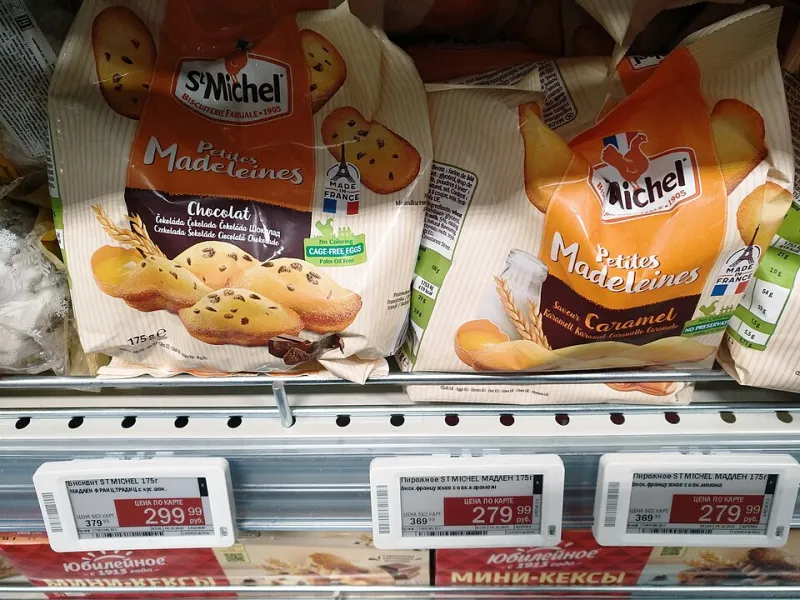
Photo: Retired electrician, CC0, via Wikimedia Commons
There is a particular kind of failure that happens quietly, three months after a container clears the port. The product sells — barely. It doesn't return. The buyer at the regional grocery chain doesn't call to complain; she simply doesn't reorder. Somewhere overseas, a factory manager reviews the numbers and concludes that American consumers are fickle. They are not. They were just never sold to.
Compliant Is Not the Same as Convincing
Most export goods arrive in the United States meeting every regulatory requirement. The FDA nutrition panel is present. The country-of-origin marking is correct. The barcode scans. And yet the product sits on the shelf like a tourist reading a phrasebook — technically accurate, unmistakably foreign.
The problem is that compliance is a floor, not a finish line. American shoppers make purchasing decisions in seconds, and they read packaging through a lifetime of domestic conventions: fluid ounces before milliliters, a toll-free number on the back panel, a satisfaction guarantee stated in plain, confident English. When a label leads with metric units, buries the usage instructions in translated prose, and offers a warranty contact in another time zone, the consumer registers one thing — this wasn't made for me — and reaches for the domestic brand beside it.
The Warranty Nobody Can Reach
Consider what happens after the purchase. A US consumer with a problem expects a resolution path measured in days, handled in American English, with a returns process that doesn't require international shipping. Exporters who treat the warranty card as a legal afterthought are forfeiting the single most important metric in American retail: repeat purchase.
We have watched mid-sized importers lose distribution over this. The retailer's buyer doesn't need to see the product fail; she needs to see that when it fails, her customer blames her shelf, not the brand. A service address in a distant hemisphere, or a guarantee written in hedged, lawyerly translation, reads as risk. Risk doesn't get a second PO.
Localization Is Design, Not Translation
The exporters who win here do something subtler than hiring a translator. They re-engineer.
- Units and sizing. Clothing and footwear conversions are not arithmetic; they are cultural. An EU size chart stapled to an American garment is a return generator.
- Panel hierarchy. US packaging conventions front-load benefits, display net weight in both systems, and treat the back panel as a trust-building document — ingredients, guarantees, and a domestic phone number.
- Regulatory fluency. Nutrition labeling, Prop 65 warnings where applicable, UPC placement — handled at the design stage, not the dock.
- Voice. Marketing copy that survives translation is copy that was written simply to begin with. Idioms don't cross oceans; clarity does.
This is why the smartest overseas manufacturers now ask their American trading partners for packaging briefs before the first sample is even produced. They understand that the US market isn't a language to translate into. It's a design brief to build from.
What This Means for Importers
If you're bringing goods into the United States, audit the sample the way a shopper would, not the way a customs broker would. Pick up the box. Ask three questions: Can I understand this in five seconds? Do I trust the guarantee? Would I buy it again?
If the answer to any of them is no, the fix belongs upstream — in the artwork, the spec sheet, the warranty template — long before the container books. Every dollar spent localizing design at the source saves multiples in markdown, returns, and lost distribution downstream.
The American shelf is not unfriendly to foreign goods. Some of the most beloved brands in every US aisle came from somewhere else. What those brands share is a simple discipline: they stopped exporting their packaging and started exporting their product — redesigned, re-labeled, and re-guaranteed for the person actually holding it. That is the sample that speaks American. And it is the only one that gets reordered.