Where the Ocean Ends and the Reputation Begins: Final-Mile Delivery as a Competitive Weapon for Overseas Brands
Photo: Thomas R Machnitzki (thomasmachnitzki.com), CC BY 3.0, via Wikimedia Commons
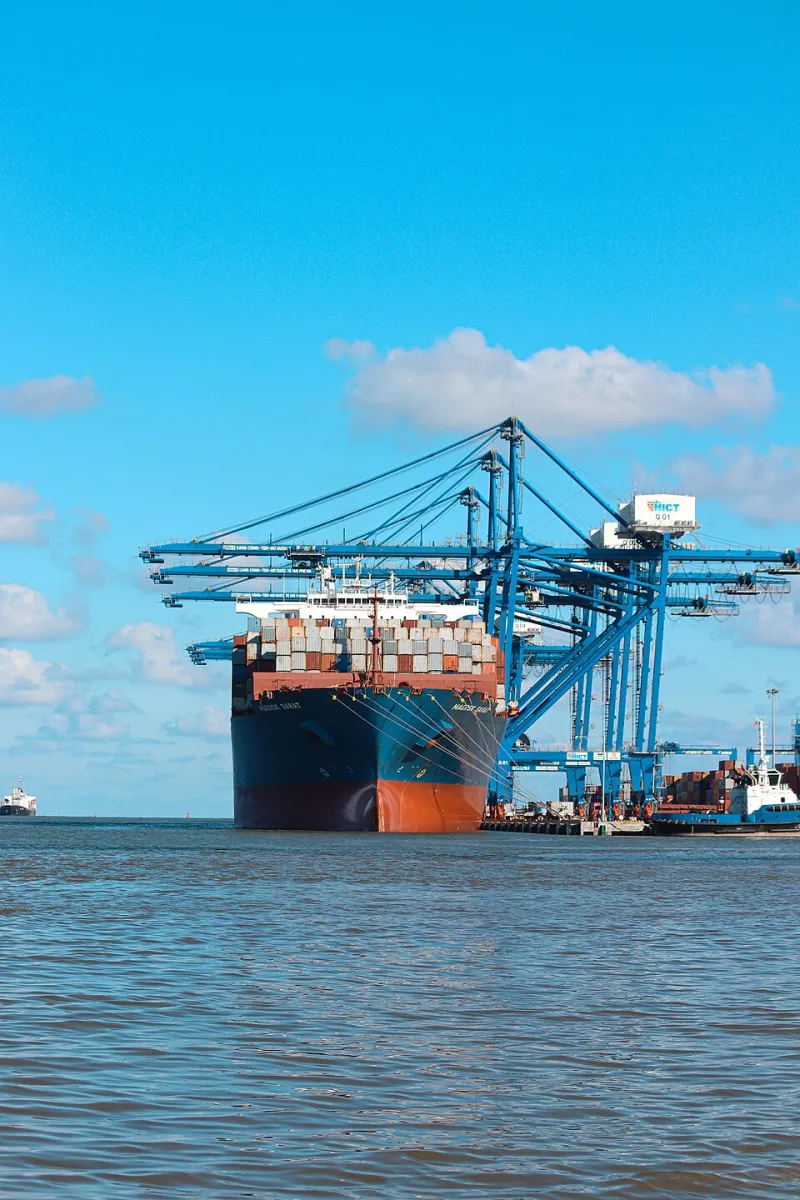
A container of consumer goods arrives at the Port of Savannah on schedule. Customs clears it without a hitch. The freight forwarder performed flawlessly across nine thousand nautical miles. And yet, three weeks later, an American distributor cancels the account. The reason was not the ocean crossing. It was the last 100 miles.
For overseas manufacturers entering the United States, this pattern has become one of the most common — and most preventable — failures in market entry. The global logistics chain has never been more sophisticated, but the domestic leg inside America is where reputations are now made or broken. US buyers, shaped by years of same-day e-commerce and real-time tracking, judge their international suppliers by what happens after the goods touch American soil.
The American Buyer Has Been Re-Wired
American procurement teams operate under expectations that would have seemed extravagant a decade ago. A regional grocery chain in the Southeast expects a four-hour delivery window. An industrial distributor in Ohio wants ASN accuracy above 98 percent. A national retailer may impose chargebacks for late deliveries that can erase the margin on an entire order.
None of this is unique to imports — domestic suppliers face the same pressures. But foreign manufacturers carry an additional handicap: their logistics visibility often ends at the port of discharge. Once the container is handed to a drayage carrier, many overseas brands go dark. The buyer, meanwhile, is watching a map that shows nothing.
The result is an asymmetry of trust. The American buyer cannot see, so the American buyer assumes the worst. In a market with abundant domestic alternatives, that assumption is fatal.
Why the Last 100 Miles Became a Selling Point
The shift is partly cultural and partly structural. Culturally, the pandemic-era boom in e-commerce trained both consumers and business buyers to expect granular delivery transparency. Structurally, the fragmentation of American distribution — a continent-sized market served by thousands of regional carriers, 3PLs, and cross-dock operators — means that "delivery in the US" is not a single service but a design decision.
An overseas brand that treats US distribution as an afterthought typically defaults to one national parcel carrier, one national LTL rate card, and a generic returns address. That approach works until it doesn't: peak-season capacity crunches, residential surcharges, and slow reverse logistics quietly corrode the buyer relationship.
Brands that treat final-mile strategy as a market-entry priority do something different. They build a domestic distribution architecture before the first order ships — regional 3PL partnerships, zone-skipping programs, dedicated returns processing, and delivery performance data they can actually show a prospective buyer.
A Framework for Competing on the American Leg
For international manufacturers evaluating their US final-mile readiness, four questions matter more than any freight quote.
1. Can you see the delivery before the buyer asks? Visibility is the entry fee. If your answer to "where is my order" involves a phone call to a trucking company, you have already lost the narrative. Integrate carrier tracking feeds into a single view your sales team can access.
2. Do you have a regional footprint, or just a national contract? A single national carrier agreement is a vulnerability. Layer in regional carriers — they often outperform on service levels in specific corridors, from the I-95 megalopolis to the Texas Triangle — and you gain both resilience and negotiating leverage.
3. What happens when the buyer sends it back? Returns handling is where foreign brands most often stumble. A US buyer that must wait six weeks for a credit because returns route through an overseas consolidation process will not renew. Domestic returns processing — inspection, restocking, rapid credit issuance — is not a cost center; it is a retention tool.
4. Can you prove your performance? American B2B buyers increasingly ask for scorecards: on-time percentages, fill rates, chargeback history. An overseas supplier who arrives with this data prepared signals seriousness. One who cannot produce it signals risk.
The Partnership Model
The practical path for most international brands is not to build American distribution from scratch. It is to partner. The US market has matured into a deep bench of third-party logistics providers, bonded warehouses, and regional delivery specialists who can operate as the brand's domestic face.
The selection criteria should mirror what a US buyer would ask: geographic coverage against your actual customer map, technology integration capability, returns infrastructure, and — critically — a willingness to share performance data transparently.
American Strength, Delivered
At KROS International USA, we have watched this dynamic reshape how overseas manufacturers win — and lose — American business. The ocean crossing has become a commodity. The differentiator is the final 100 miles: the regional carrier who shows up in the promised window, the returns processed in days rather than weeks, the delivery data that lets a buyer in Dallas plan with confidence.
Global trade still begins at sea. But in the American market, it is concluded on a doorstep. Brands that master that final stretch are not just delivering products — they are delivering the one thing every US buyer is actually purchasing: certainty.